Less setup between sessions
Reusable routines bring an ordered exercise list into a new workout. Custom exercises and kilograms or pounds let people record the way they train, without rebuilding a familiar session each time.
More lifting.
Less logging.
A workout logger for iPhone, designed and built by Swiftkraft. From reusable routines to Live Activity rest timers, the focus is on making a session easier to record and revisit.
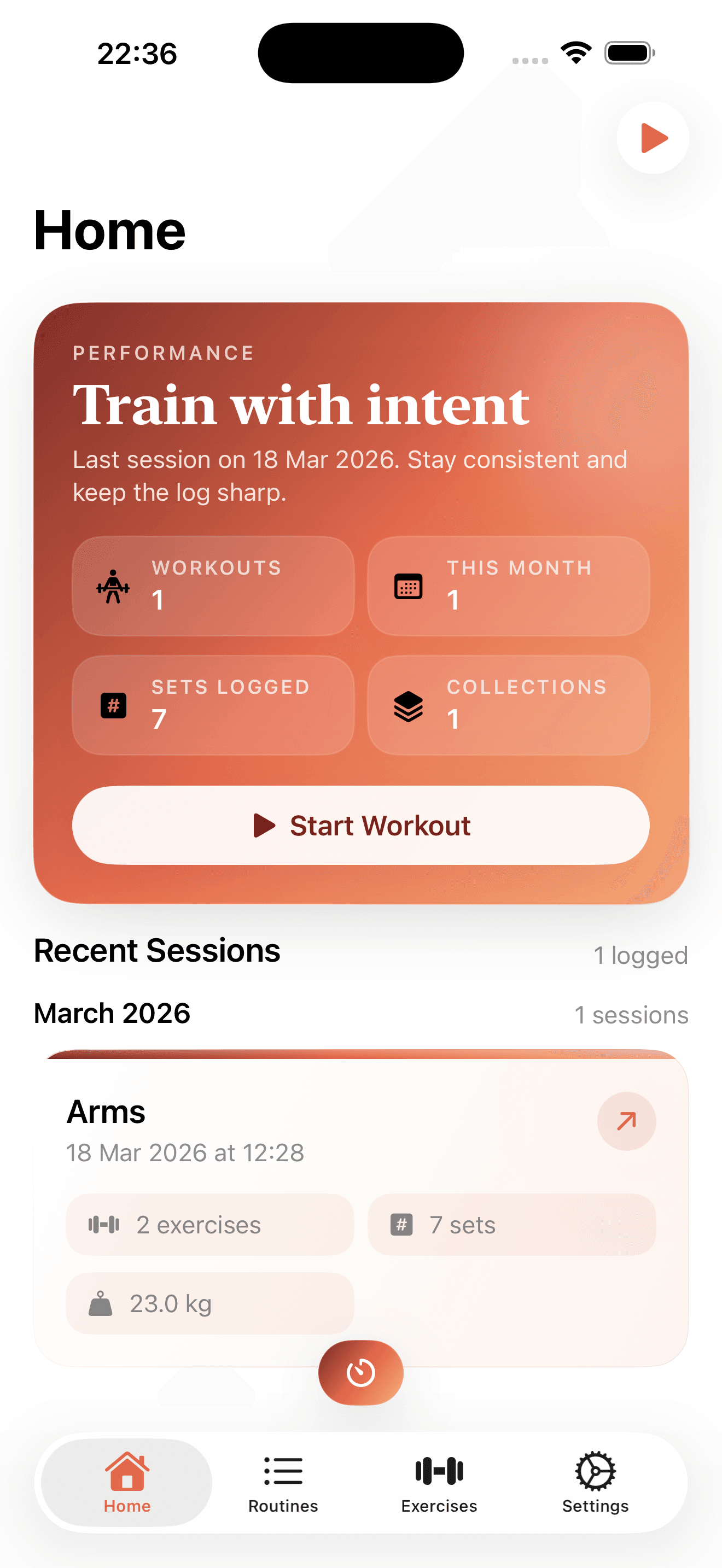
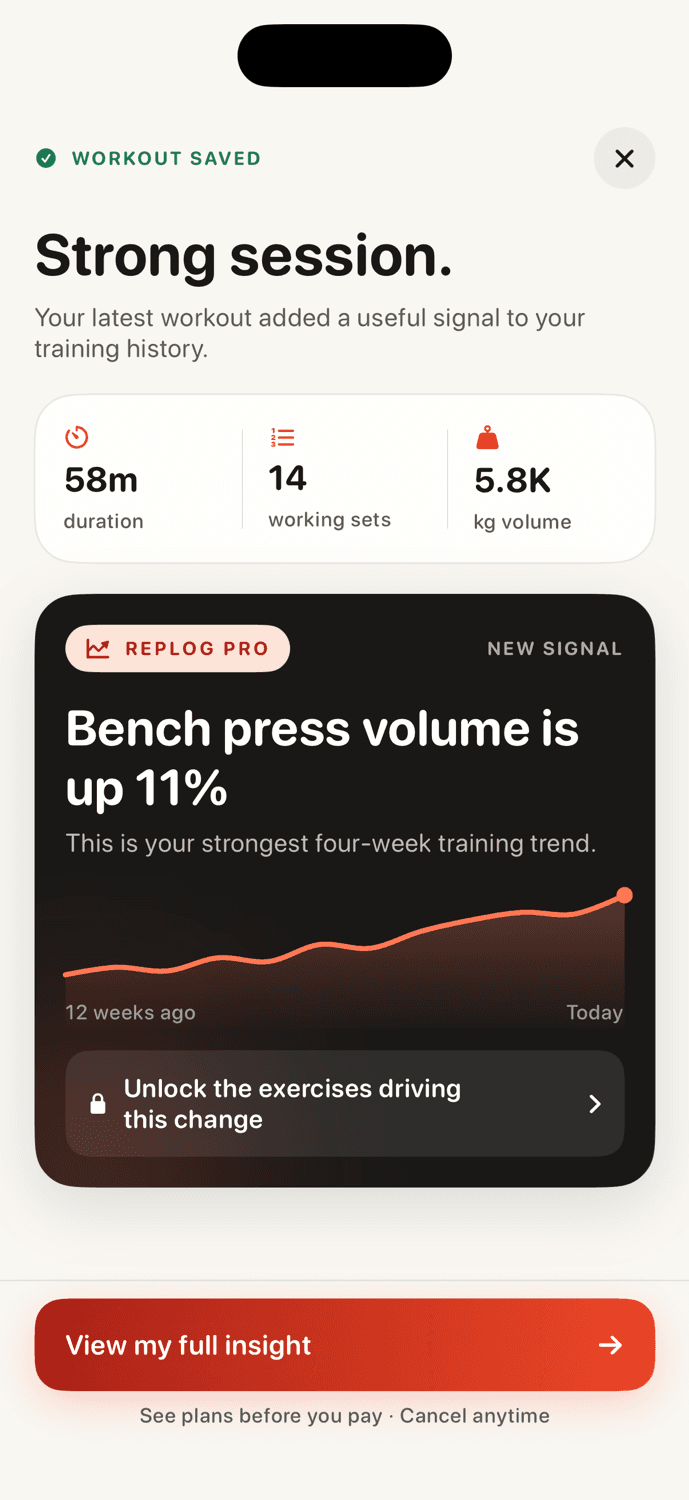
Selected preview: RepLog workout summary with completed sets, duration, and training volume.
The problem
Between sets, a workout log needs to make the next action obvious. RepLog is built for people who want to record their training, repeat familiar routines and look back at earlier sessions without a lengthy setup.
That shaped the core flow: start a workout, add exercises or load a routine, record each set, then finish and revisit the session. Weight, reps, duration, distance and notes have a place without requiring a RepLog account.
This is our own product, in active development toward its first public release. The work below shows the decisions and implementation behind the current build.
Design & engineering
Reusable routines bring an ordered exercise list into a new workout. Custom exercises and kilograms or pounds let people record the way they train, without rebuilding a familiar session each time.
SwiftData stores workouts, exercises, sets and routines on the iPhone. Core logging works without a RepLog account, and detailed training records are kept out of the website and waitlist database.
ActivityKit brings the rest countdown to the Lock Screen and Dynamic Island on supported devices. Remaining time is calculated from a deadline, with saved state for pauses and app restarts.
Explicit product events help us understand feature usage. Workout names, exercise names, notes and set values are excluded. Session replay and interaction autocapture are disabled, and an in-app setting controls analytics.
Persistence tests save and reopen a file-backed store to check exercise order and weight units. Timer tests cover restoration, pause and expiry, targeting the details that make a workout log useful over time.
The separate Next.js launch website accepts waitlist signups, validates email addresses and handles repeat submissions. A saved signup is retained even if its notification email fails.
Where the project stands
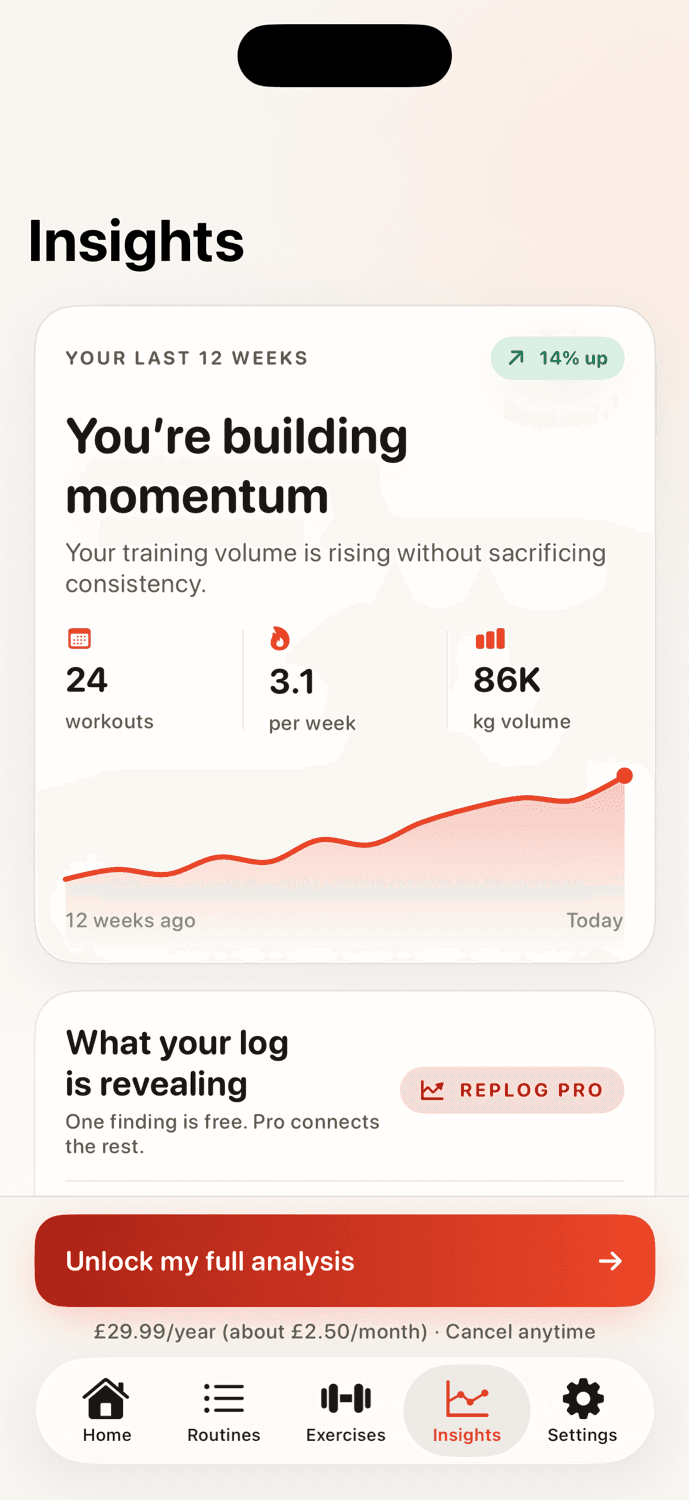
Private iCloud recovery is part of the release plan and still needs integration and device validation. Insights and purchase flows also need release validation, alongside final App Store preparation.
The app is pre-release. These are the next delivery steps; the launch waitlist is available today.
Your next project
RepLog brings together product flows, local data, native iOS features and launch preparation. Talk to us about your users and what your first release needs to do.